


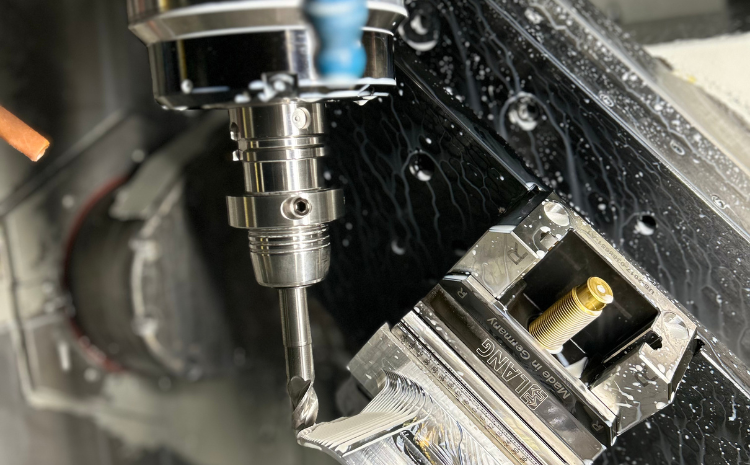
Smart Tool Selection and Combination Strategies
One of the most important aspects of the project was determining how a limited number of tools could effectively support a wide variety of component geometries.
Our engineers analyzed machining features, material requirements, tool accessibility, cutting conditions, and process requirements to identify opportunities for tool commonality.
Combination tools and optimized machining strategies were incorporated wherever appropriate, helping reduce unnecessary tool changes while maintaining the required machining performance.
This required careful coordination between:
- CNC programming
- Process planning
- Tool selection
- Machining strategy development
- Toolpath optimization
- Process validation
- Production engineering
The result was a manufacturing approach focused on standardization without compromising precision.
From Programming to Real-Time Production
The project was not limited to developing CNC programs.
The complete automation setup was deployed, validated, and transitioned into real-time shop-floor production.
This meant ensuring that the developed processes were practical, repeatable, and capable of delivering consistent results under actual production conditions.
The successful implementation demonstrates the importance of taking CNC programming beyond toolpath generation and viewing it as an integral part of the overall manufacturing engineering process.
More Than 100 Parts. One Engineering Mindset.
Successfully programming and automating more than 100 aerospace components with only 26 precision tools was a demanding engineering challenge.
But the real achievement lies in what made it possible:
Smart planning.
Standardized tooling.
Optimized machining strategies.
Collaborative engineering.
Production-focused validation.
At Cognitive Engineering Technologies, we believe that manufacturing excellence comes from finding smarter ways to solve complex engineering problems.
This project is another example of how the right combination of CNC programming expertise, manufacturing engineering, automation, and process optimization can turn manufacturing complexity into a scalable production solution.
Engineering Smarter. Manufacturing Better.
Our focus remains on developing practical, production-ready engineering solutions that help aerospace manufacturers achieve greater efficiency without compromising precision.
100+ Aerospace Components | 26 Precision Tools | One Optimized Manufacturing Approach
Cognitive Engineering Technologies — Engineering the Future of Aerospace Manufacturing.
One Setup. Zero Compromise. 100 + Aerospace Parts in Automation
Redefining CNC Machining Excellence: 100+ Aerospace Parts Automated with Just 26 Precision Tools
Turning Engineering Complexity into Manufacturing Efficiency
In Aerospace manufacturing, precision is non-negotiable. Every component demands accuracy, consistency, repeatability, and a manufacturing process that can perform reliably at production scale.
At Cognitive Engineering Technologies, we recently achieved a significant milestone that demonstrates how intelligent manufacturing engineering and process optimization can transform CNC machining performance.
Over 100 unique aerospace components were successfully programmed and automated using just 26 common precision tools.
What makes this achievement significant is not simply the number of parts completed, but the engineering challenge behind creating a standardized, efficient, and production-ready machining approach for such a diverse range of aerospace components.
The Engineering Challenge
Machining more than 100 unique aerospace components using a limited tool set requires much more than conventional CNC programming.
Each component can have different geometries, machining features, dimensions, tolerances, and manufacturing requirements. Developing individual machining strategies while maintaining consistency across the complete part family presented a complex engineering challenge.
The objective was clear:
How can we efficiently manufacture a large variety of aerospace components while minimizing tool variation and maintaining quality, accuracy, and production efficiency?
The answer came through a combination of process planning, CNC programming expertise, tool standardization, and engineering optimization.
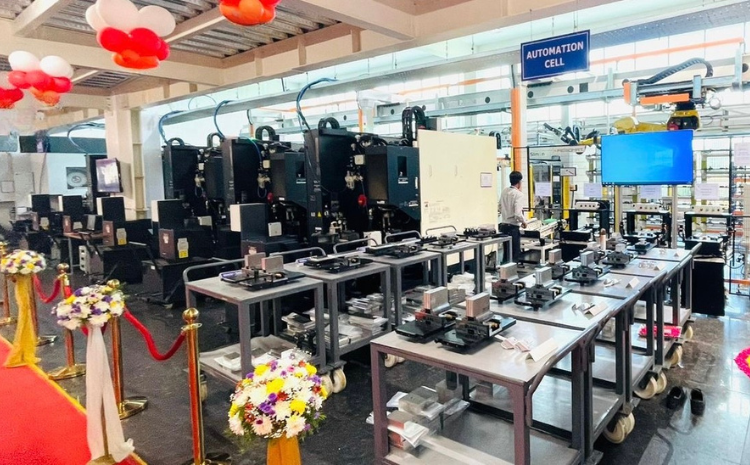
One Setup. Zero Compromise.
Working in collaboration with a leading aerospace company in Bangalore, our engineering team developed and validated a full-scale CNC automation setup designed to support the production of more than 100 different components.
A key element of the approach was the selection and optimization of 26 precision tools capable of supporting the machining requirements across the complete component range.
Rather than relying on a large number of specialized tools for individual components, our team focused on maximizing the capability of common tools through intelligent application and machining strategies.
This approach helped create a more standardized and efficient manufacturing environment.
One Setup. Zero Compromise.
Smart Tool Selection and Combination Strategies
One of the most important aspects of the project was determining how a limited number of tools could effectively support a wide variety of component geometries.
Our engineers analyzed machining features, material requirements, tool accessibility, cutting conditions, and process requirements to identify opportunities for tool commonality.
Combination tools and optimized machining strategies were incorporated wherever appropriate, helping reduce unnecessary tool changes while maintaining the required machining performance.
This required careful coordination between:
- CNC programming
- Process planning
- Tool selection
- Machining strategy development
- Toolpath optimization
- Process validation
- Production engineering
The result was a manufacturing approach focused on standardization without compromising precision.
